


Why Housing Societies Are India’s Most Underrated Climate Solution

India’s climate conversation usually moves in two directions:
Upwards, toward national policy, infrastructure, and industrial emissions.
Or inwards, toward individual lifestyle changes.
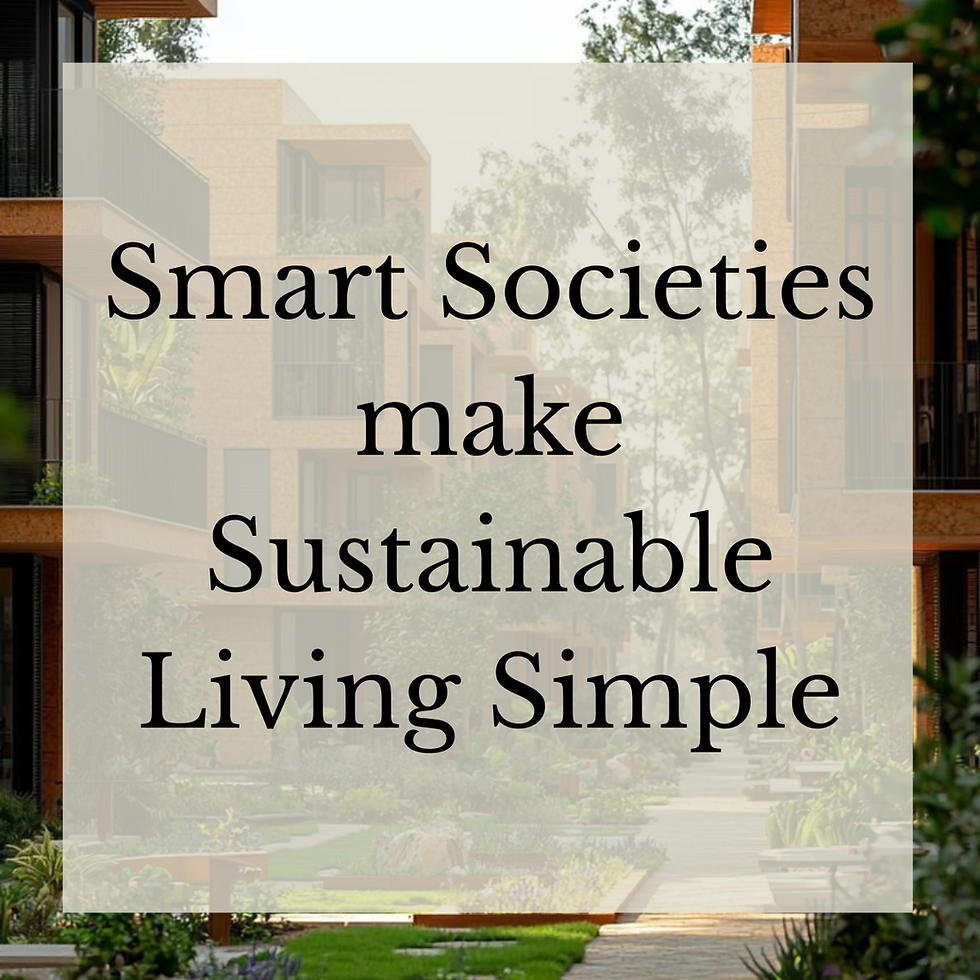
Between these two sits a layer that rarely receives serious attention: residential societies. Not as housing complexes, but as organized living systems where hundreds of people share resources, infrastructure, and daily habits.
That combination creates a rare opportunity: small administrative decisions can translate into large environmental outcomes.
The Opportunity Hidden Inside Everyday Waste
Waste is one of the clearest examples. According to the Central Pollution Control Board, the average urban Indian generates roughly 0.5 kilograms of waste per day. In a 100-apartment society with four residents per home, that becomes about 200 kilograms daily. The important part, however, is not the number.It is where the waste originates, inside a contained system.
This makes several practical interventions surprisingly feasible:
Community composting stations that process kitchen waste within the premises
Dry waste sorting rooms where paper, plastic, and metal are separated before collection
Reuse corners where residents leave items like books, utensils, toys, or small appliances for others to take
Repair and reuse days, where local technicians help extend the life of electronics or furniture
Bulk purchasing programs that reduce packaging waste for frequently used household products
Some societies have begun calling these spaces “Resource Rooms” or “Circular Corners” which are small, practical hubs where waste is prevented before it leaves the building. When such systems are established, the society does not simply manage waste.It begins to circulate resources more intelligently.
Water: Where Societies Can Become Climate Assets
Urban water stress has been widely documented by institutions like NITI Aayog. Yet residential societies already operate complex water systems every day. They manage borewells, tanker deliveries, pumps, storage tanks, and pipelines. That makes them ideal locations for practical water resilience measures such as:
Rainwater harvesting systems that capture rooftop runoff and recharge groundwater
Smart water metering that helps residents understand and reduce consumption
Grey water reuse systems where water from sinks or showers is treated and used for gardening or flushing
Leak detection audits conducted annually to prevent invisible losses
Native landscaping that replaces water-intensive lawns with plants suited to local climates
A society that manages its water well does more than reduce tanker costs. It becomes locally resilient, reducing pressure on already stressed urban water sources.
Energy Efficiency Without Major Investments
Energy systems within residential complexes are often overlooked, even though they operate continuously.
Electricity powers:
lifts
water pumps
parking lights
corridor lighting
security systems
Improving efficiency does not require large capital investments. Societies can begin with simple operational changes:
LED retrofits for all common-area lighting
Motion-sensor lighting in parking areas and corridors
Timer-based pump operations to prevent unnecessary electricity use
Solar rooftop installations that power common areas
Energy audits that identify inefficient equipment or wiring
Many societies discover that common-area electricity bills drop significantly once these measures are implemented. Environmental benefit emerges naturally from better operational management.
The Behavioral Advantage of Shared Living
Infrastructure alone does not create lasting change. What makes residential societies uniquely powerful is proximity. People see what their neighbours do. Systems are visible. Practices become normalized.
A composting unit in the parking area makes waste tangible.A reuse corner makes consumption visible. A notice board showing monthly water usage makes resource use measurable. These small feedback loops reshape habits. Over time, societies can also host activities that reinforce this culture:
Skill-sharing workshops on composting, gardening, or repair
Tool libraries where residents borrow rarely used equipment instead of buying it
Community garden spaces that use compost generated within the premises
Resident sustainability committees that manage and expand these initiatives
A housing complex gradually shifts from being just a residential space to becoming a local climate community.
Why This Matters More Than We Think
India’s cities are expanding rapidly, and apartment living is becoming the norm in urban areas. Each residential society represents hundreds of people, shared infrastructure, and collective decision-making.
When such spaces manage resources intelligently: waste, water, energy, and consumption, the impact multiplies quickly. A single well-managed society can divert tonnes of waste from landfills, save millions of litres of water, and reduce thousands of units of electricity consumption each year. Multiply that across thousands of societies in cities like Bengaluru or Hyderabad, and the scale becomes impossible to ignore.
Rethinking What a Residential Society Can Be
Residential societies are often viewed as administrative bodies concerned mainly with maintenance. But they are capable of much more. With the right systems in place, they can function as small urban climate hubs, places where sustainable practices are not occasional campaigns but everyday operations. The infrastructure already exists. The communities already exist. What is often missing is a structured way to implement and manage these ideas effectively.
If Your Society Wants to Take the First Step
Many residential societies want to adopt these practices but are unsure where to begin, how to design systems, coordinate vendors, engage residents, and ensure initiatives actually continue. That is exactly where Neti works.
Neti partners with residential societies to design and implement practical sustainability systems from waste management and water solutions to community-driven initiatives that make sustainable living easier for residents.
What often surprises committees is that these initiatives are not only environmentally beneficial; they are financially sensible. When waste is managed within the premises, transportation costs reduce. When water systems are efficient, tanker dependence drops. When common-area electricity is optimized, monthly maintenance expenses decline. Over time, these improvements translate into measurable savings for the society.
Equally important, well-managed resource systems improve how a society is perceived. Prospective buyers and tenants increasingly look for residential communities that demonstrate thoughtful management, lower operating costs, responsible infrastructure, and a culture of collective care. In that sense, sustainability becomes more than an environmental effort; it becomes a signal of a well-run community, something that can positively influence both reputation and property value.
If your society is exploring ways to reduce waste, conserve water, or manage resources more intelligently, you can reach out to Neti to begin that conversation. Because meaningful climate action does not always begin with a national policy. Sometimes it begins with one housing complex deciding to run its systems better and discovering that when resources are managed well, both the environment and the community benefit.


Comments